Saturday, March 22, 2008

Dinowaurs in a (new) nutshell

Over the course of development at Intuition Games, Dinowaurs has gone through several design iterations. It's quite a different beast than when we started. This post is an attempt to explain the new Dinowaurs design in a nutshell.

Premise

Dinowaurs tries to recreate the childhood joy of dinosaurs fighting each other. In the game, two opposing teams of villagers attempt to gain each other's land by strapping crazy weapons to dinosaurs and forcing them to fight each other. The dinosaurs themselves are actually oblivious to the fact that they're fighting.

Gameplay

Dinowaurs is a free-to-play multiplayer online combat/strategy game played in real-time. It has MMO-like persistence and character customization, and can be played in your web browser if you have Flash 9.

You play the game by (indirectly) controlling a dinosaur that can be equipped with weapons meant to destroy the enemy's dinosaur and villages in an arena. Each village produces gold and allows you to buy and equip weapons there using a simple drag-and-drop interface.

Once your dino is equipped with up to two weapons, you can go out and attack the enemy. Be careful of enemy villages, since they'll attack you with some of the same weapons you have. The other player will of course be trying to do the same to you. If you kill the enemy dino, it will hatch out of a new egg at its nearest village.

If you destroy an enemy's village, you can build your own village there instead. Once you capture all the villages in the arena, you win.

Villages and their Tiers

Each village has a different tier rating tied to its location. The villages in the middle are tier 1 and allow you to only buy and equip the first 3 weapons. The villages outside of those are tier 2 and allow you to buy and equip the first 6 weapons. The outermost villages are tier 3 and give you access to all 9 weapons.

At tier 1, you start off with trajectory-based weapons, allowing you to shoot arrows, cannonballs, or rockets in an arc at your enemy. As you get access to higher tiers, you get access to more interesting weapons that allow you to create a strategy for attacking your enemy. Maybe instead of using a trajectory-based weapon, you'll use a tactical strike weapon to "drop the hammer" on a village deep inside enemy lines, crippling your enemy's gold production.

All of this is wrapped up in a cartoon dinosaur game that can be started and finished before your lunch break is over. :)

Wednesday, March 12, 2008

Des Moines Game Dev Meeting == Totally Cool. Dinowaurs play testing

Mike, Josh and I(Greg) scuttled down to Ankeny for a developer meetup that the DSMGG held at a local gaming place Cyber Ops Gaming Center. I got there a little late, but everyone's projects were really cool and the whole tone of the place was really exciting. I suppose anytime you get a bunch of passionate, smart people in closed quarters together we start feeding off each other.


Like I said, I got in a little late, but I was able to catch the last half of David Duke's presentation on his sweet trajectory shooter prototype, Mini-World Wars. It was super simple, but those can be the best prototypes. I keep seeing a bunch of these gravity-body mechanics coming out post Mario Galaxy, and it's really interesting to see the influence that's had. It's definitely a good thing. David's prototype was sweet because not only did it involve mass-based physics but also took into account the mass of the orbiting moon, which affected me in my trousers as well ;) We all want to play ASAP!


Later we were lucky enough to run a few play testing sessions with the guys that were able to stay longer. It was certainly an interesting experience, it being our first run through of the game with other people. I would say overall, while it wasn't what I hoped for, we uncovered a few new bugs, some UI issues, and a consensus amongst the room about the villagers. We've got a fair bit of work ahead of us, but that's good, we've built the stone now it's time to shave it down to a pretty marble dino. Hopefully the next time we play test we'll be to focus more on the fun and intricacies of the gameplay itself.


It was great to get some of that inspiration last night. Sometimes living in Iowa you feel a little isolated from the "happenings" of game development, and while there's TIGSource and RPS and so on, there's no substitute for real human interaction with developers. Just the slightest bit of someone else's project, or hearing about real development issues others are facing can help a great deal. We all left pretty wide-eyed and ready to plug in for another go 'round.

Monday, March 10, 2008

"Wild & Free: A True Story" or how we forgot about Professor Porpoise: Adjunct Faculty Advisor to the Apocalypse and learned to love the boto

Mike and I have been chipping away at a little weekend side project of ours for a month or so. He's got a prototype up and running, and while the swimming mechanic is similar to PP:AFAA, we've added some cool new stuff that I think will be pretty compelling gameplay wise. Basically it's a very simple deathworm-like, where you command the likes of a studious Boto (amazon river dolphin) and fight the evil river-polluting humans on their way to refineries and such. With the aid of schools of flesh-starved pirahnas, you summon the power of the riverbed to take on impossible odds.


I've mainly been working on the logo, (this is actually a school project, so the logo was our first assignment) but have started in on the rough art style to help me finish the logo. It's pretty close to done, hopefully we'll have an alpha posted up here pretty soon.

Wednesday, March 5, 2008

Inspired game idea: Stratastencil gameplay

My Paper Mind, by Javan IveyA friend of Greg's just linked this to him: "My Paper Mind," an animation of paper stencil cut-outs, using a technique referred to as "Stratastencil." The interesting thing is that the stencils are layered on top of each other, and photographed and lit such that the previous frames are visible behind the current one, receding into space and shadow. The effect is mesmerizing. Visit Javan Ivey's My Paper Mind page to view the video.

Now obviously, if you're a game developer, you'll likely think "oo, I wanna make a game like that!" At least that's what I thought. The easiest thing design-wise would be to copy the same visual effect, where the game world is a stencil, with previous frames in the background. It might take some graphics trickery to do the lighting such that it looks realistic. Or you could just make a sheet for every possible combination of object locations. Heh.

But what if you made a game based on the abstract concept of this, instead of the literal visual effect? What if you could see your previous actions in the distance, and that affected your current choices? What if you could go back to those frames to alter the current one? How could you design interesting gameplay by showing the past and the present at the same time? One draws parallels to something like Braid, but let's think past that.

Imagine the space that exists from the front frame to the back frame. What happens if you collapse that space? What happens if you connect it, creating a 3-dimensional form from that space? How do you explore such a space?


I think exploring some of the later questions could lead to some interesting game ideas.

Saturday, March 1, 2008

Glitch art, tiny taste of Dinowaurs

Hey, just wanted to post a piece of "glitch art" we stumbled upon during alpha. Enjoy!


Hopefully soon, we'll have some real screen-shots with updated art and less explosive diarrhea. ;)

Tuesday, February 19, 2008

GDC 2008 Day one: Podcast teaser and other hijinks

Hey reader, we're broadcasting deep within the bowels of the bay area. We made another podcast last night, hopefully we'll have time to edit it and maybe make another one. There's so much to talk about with the IGS, we tried to hold it in as best we could until we could talk about it "fresh" on the podcast. So in lieu of an edited podcast we give you this gem. Man, ever since I learned how to spell that, it's been open season on "lieu." It has surpassed "purview" and "ilk," at least in written form.

THE ALMIGHTY INTUITION DEVCAST WORLD PREMIERE

On the night of day 0, I decided to search out a mysterious beep that seemed to emanate from Ted's bag. Apparently Josh captured my safari on camera.


Turns out it wasn't the bag, or even in the room, but outside somewhere. Next day, we posed for our book-nook picture at IGS.


Later... lunch. Where we learned a crafty new way to make a cube out of 6 business cards unbeknownst to us that it would destroy them.


Then sushi and talk with Tyler Streeter, our mutual friend from the VRAC. He does research on A.I. specific to the human brain. He's the one in the 2nd picture on the left, blurried. He's brilliant. And married... sorry ladies!


Oh yea, bonus picture. We found a guy with a ghillie suit laptop mod/cover thing. Anyway... pretty cool. Hope you liked the podcast. We really tried to cut it down to a reasonable length, and well try to get out a real one soon.

Sunday, February 17, 2008

Oh what a long strange trip it's been. GDC 2008: day 0

Well, today was a work day, even though it was the Sabbath we worked just like Mike said. User stories, a little Orbit Room cafe, and so on. But that, was but the beginning. Awhile later we met up with Ted and we fumbled around San Francisco, going to two predetermined restaurants that ended up being closed. Blah blah blah, long story short, Mike made this vs. screen mockup that's probably going to change the way we think about gaming.


Soon after Mike's out-of-body inspiration his eyes went blank and he ran into the Moscone center stripping off his clothes. We were able to recover his clothes after finding him dripping with cold sweat in a fetal ball. We clothed him as best we could and decided he'd just sleep there. He kept spouting gibberish about Warren and his mother, we're not sure, but hopefully we'll see him there in the morning. We may have lost Mike, but we've gained a vs. screen beyond imagination.

Saturday, February 9, 2008

In Search of the Oracle: Indie Developer Productivity Snacks and Calisthenics

Mike's parents were kind enough to bring us some developer rations on Thursday. None of us really eat very healthy in the office, except for Josh, who is all into flax seed. So here are our favorite bits of sustanence.

Daddy Ray's Fig Bars. This is one of Josh's staples, the rest of us still don't know where he gets them, but we think they're delicious.

2 lb. box of Pepperidge Farm Cheddar Goldfish - Whole grain if you can find it. This is a classic, and therefore manditory.

Sam's Choice Mountain Trail Mix - recovered deep within the belly of the beast, these precious nuts, chocolates and raisins are tainted with corporate shame, but are oh so fortifying.

Gatorade lime Rain, 64 oz. - Possibly the finest drink to ever grace the Earth. I'm really the only one who drinks it. But we use the old bottles for water bottles now.

Red curry rice and beans. I've got a recipe on my site, it's cheap and easy and can stretch a long ways over a large amount of rice. We have some form of it once or twice a week here at the office.


Oh yea, Nerf hoops are the new pilates...

Friday, February 8, 2008

Today's Office Tunes - Old School Amiga

Josh found this sweet music today while sifting through some dusty bookmarks of his. It's freely distributed music (under the creative commons license) and would work for our game if we wanted it. Mostly it's just kick-ass and old school, and we listened to it all day. Check it out. This one too. The recording label, Monotonik, has other cool compilations that have albums beyond the Amiga stuff.


Internet Archive rocks, it's easy to forget about; but so is Mike, so we forgive you.

Monday, February 4, 2008

Progress Update #2: Intuition has a Podcast

"Hey, we're back!"

No, it's not Dr. Katz, but instead a much drier, less-squiggly version here to bring you our next segment: way more recent stuff. We haven't been showing as many pretties as we should, so above, I give you the very unofficial, unfinished Dinowaurs logo. It'll probably resemble something like that above.

Design Changes
Throughout development we've tried to implement the agile attitude into our process. For those not hip, we've loosely interpreted the milestone system into what many would call a bastardization, but it's been working. By staying loose about the design and not adhering to waterfall type milestones, we've allowed ourselves freedom to completely change the design of the game. Now this doesn't come without a price, and it may kick us in the behind, but we think that this is the way to go in the web-games space. Iterate and push until we can convey the best version of our game's high concept possible within the time-frame given. Credit Johnathan Blow's recent speech on Conveyance and Pushing at the Nordic Game Jam.

Now onto the changes to Dinowaurs. Basically since hitting "alpha" we've decided that too much of the game goes on in the middle of the map in the very first encounter, ultimately leaving the other, stronger tiered villages to collapse given the upgraded weapons awarded to the player overtaking the first, and their fourth, village. To aid this, we've decided to change a number of things. This makes our third complete overhaul of the game's mechanics, and each time we've done this, we feel better and more excited about where this game is going. Change is good. For our country too ;)

  1. Resources - They're back and they accumulate at a rate based on the amount of villages the player has (represented by "gold" or the like).
  2. Tiered Weapons - Tech tree for weapons is now based on the village the dinosaur is at, instead of the amount of villages taken.
  3. Village Tiers - Each construction site is intrinsic to it's original tier level. No other level village can be built there.
  4. Ammo - Ammo is no longer unlimited, but tied to the resources and charged against the total value with each shot, at a value determined by the ammo type.
  5. Weapon Production - Weapons are purchased with resources (e.g. gold) when the player chooses to produce them.
  6. Upgradeable Village Guns - Villages can be equipped with more guns (or maybe upgraded existing guns) to propagate more of a defensive strategy.
  7. Shooting - Removing the pause after shooting a weapon. The shot can cost resources now, forcing the player to consider each shot carefully, and besides, it will speed up the game.

Also, we've been talking a lot about weapons since a great portion of the game's fun factor relies on them...

Four basic weapon types, upgraded with tiers (keep controls/weapon properties fairly consistent throughout tiers)

  1. Trajectory - hold to power-up, let go to fire
  2. Strike - hold to choose spot along terrain, let go to fire/drop
  3. Deploy - launch from dino
  4. Jetpack - use trajectory control to "launch" the dino and then float down
  5. Special - One special weapon, chosen as a dino's "special move" in the profile menu. This will be available via the third and final village tier.

Jetpacks!
Well, we were hesitant to add this feature, but quickly swayed after playing Off-Road Velociraptor Safari and noticing the community response to a casually-mentioned, fictional game "Jetpack Brontosaurus." The monocled raptor screen shot and a few posts on the TIGSource forums convinced us that this feature would not be too intensive and would add a much needed, mobilizing function to gameplay. After thinking for a handful of milliseconds, Mike came up with a way to use our current system to power the jet pack, which should work just like any other trajectory based weapon. We are in the process of implementing this now, but we're all excited to see our favorite Gov. Skittles, the stegosaurus, careen through the air dropping grenades o'er her enemy windmills!

Podcast
Lately we've found ourselves tossing some ideas around the ol' water cooler ("What's the scuttlebug?") about Indie Dev podcasts, or lack thereof. All of us love listening to podcasts, mostly NPR and game industry stuff, but nothing that sates our thirst for independent game development.

Nothing official just yet, but we plan to cover the latest in indie dev news, indie games we've played and loved, and anything those topics might spawn. We like tangents, those were always our favorite teachers in high school. Not the circle kind, you know, the kind that go off on an unrelated subjects only to find themselves lost in a wood with no lesson plan to guide them.

We've recently recorded a dry-run podcast, testing how the recording setup works and getting our feet wet with talking like we know things. It's harder than you may think, but in the safety of our own homes, the insurance policy of audacity's editing power, and Mike's sexy chocolate vocal chords, we're going places. Maybe not fancy places, but places nonetheless.

Saturday, February 2, 2008

Intuition & Dinowaurs Progress Update 1

It has been a little over 2 months since our last update. Many of you are probably thinking that the project has been scrapped or the company went under. Do not fear; we just took a blogging hiatus of sorts. Here's a rundown of some things that have happened over the last 2 months:

Multiplayer Prototype
We completed our 3rd milestone - a version of the game where 2 people could play multiplayer versus each other. At this point we realized that every game would consist of the players building villages as they went along, and then as they got close enough, they would just dumbly fire weapons at each other over and over again. It was pretty boring, actually. Overall, it was a good thing, since we were able to see what changes would make the game better. Furthermore, the prototype seemed to confirm that the game had a chance of being fun.

The Triumphant Return of Greg
Greg returned from Rome!! One of our team was studying abroad in Rome, and returned over the holidays. It was the first chance Mike and I had to work with him since we were working on PP:AFAA in August.

Design Changes 1.0
Based on our reaction to the multiplayer prototype, and a few suggestions by our (awesome) producer at Kongregate, Chris Pasley, we had a brainstorming session and came up with some improvements on our game design. This particular session was an interesting experience. At the time, we didn't really have any paper to write on, so we ended up using the backs of small, circular paper plates. Each idea was drawn on a plate, and then we'd discuss them. Those we didn't like, we discarded to the side. The system worked surprisingly well; in the end, we made these changes to the game design:

  • Object of the game
    1. "Capture" all villages by destroying the enemy's and building your own
    2. Kill the enemy dinosaur with no enemy villages remaining
  • Start of game
    • Dinosaurs start in the middle of the arena
    • All village zones are occupied by a village
    • Each player owns all the villages on his/her half of the arena
  • Dinosaur death
    • When a dinosaur dies, it spawns at the nearest built, friendly village
    • Delay for spawning
    • Unlimited lives (as long as you have built villages left)
  • Villages
    • Villages attack enemy dinosaurs, causing enemy dinos to stay back and use longer-range shooting
    • No more village modes (production/defense)
    • Villages have more health and attacking ability increasingly toward the edges of the arena, represented by tiers of more advanced technology in weapons and village tower architecture
  • Weapons
    • Weapons split up into tiers, which are unlocked for each new village captured
    • Delay between shots (dinosaur is dazed from firing)
    • Unlimited ammo

Dinowaurs Alpha
Several important things were delivered for our alpha milestone. Here are the most notable:

  • Persistent player accounts
  • GUI menu content and interaction
  • Accessory attachment system (!!)
  • Design changes implemented

Its pretty exciting to see these kinds of things coming together. Players can create a dummy account, create their 3 dinosaurs, and all of the options currently available can be saved to their account. One of the most exciting things is how well the accessory attachment system works.

We'll save the details for another post, but basically accessories appear to be attached to the dino, since they follow the same positions and rotations of the bones in the dinosaur's skeleton. In our case, since the dino skeleton is not officially in our engine, we just export the movement of the bones to a file and load that up for each animation. It has become an industry-standard way to attach objects to characters for AAA games (pretty much since the days of Half-Life - thanks Valve!!), and we've adopted it to great success considering Dinowaurs is a real-time multiplayer dinosaur combat Flash game. In fact, Mike just finished up refactoring the weapons to use the same system.

Implementing the design changes got us closer and closer to a really fun game. As of now, it's kind of fun, but we know that we're still missing something. We can all sense that we're getting closer and closer to the fun, though. :)


New Office Space

We finally moved into an official office! It's on the east side of campustown in Ames, conveniently very close to our favorite Thai restaurant Thai Kitchen. It's pretty comfortable for Mike, Greg, and I, and there's even enough room for a microwave and mini-fridge. Surprisingly, we've pretty much outgrown the space after just a month of being there. More on why next.


Intuition's 5th Member: Joe Bergeron
Greg and I have had several discussions over the past couple months about how we're worried that the amount of programming work for a game of this size would be a lot for one person. There's no doubt that's true, which just goes to show how amazing of a job Mike has done as the only programmer on our game. He wrote the Melba Toast engine himself and was able to get most pieces of the game put together so far. Go Mike!

However, we're now at the point where much of the game has been hacked together just to get stuff in. Most of the components of the game code need to be refactored in order to make it easier to do things like add new weapons and keep the game stable as we near release. With refactoring needed, added features still, and a couple bug fixes to help us test regularly, there are plenty of reasons why another programmer would speed up development to ensure a successful release.

Mike has been hesitant in the past to add a new programmer, simply because of the skill required to pick up Melba Toast and Dino Server (the implementation of our game that runs on the server) in a timely manner, and the time/money needed to find someone at all and then make sure they're going to be a good fit.

However, one name would come up over and over again as the right man for the job, if he'd only be willing: Joe Bergeron. Mike has worked with him in the past on their game Codename: HSI, and Joe has gained a reputation for himself at VRAC as "the guy who wrote the OpenGL renderer for the Linux version of the Unreal 3 Engine." At first we weren't sure if he'd be interested in completely jumping in and joining us as a partner. We've actually been (half) joking with him about it for the last couple months.

When we sat him down for a slightly more serious meeting and asked him last week, he decided that now was the time. Welcome Joe!! Everyone is really pumped about it, since we all get along with him really well and he's such a great fit in terms of skill set. To demonstrate, here's a breakdown of our unique skills and interests to show how well each member of the team fits in now:

  • Mike
    • Game programming
    • Gameplay prototyping
  • Joe
    • Engine programming
    • Graphics programming
  • Ted
    • Drawing
    • Concept art
  • Greg
    • Graphic design
    • Creative writing
  • Josh
    • Technical art
    • Business-y stuff

As you can see, that's nearly every aspect of game development, especially Flash game development. Woohoo! We have a pretty well-rounded team now.

This is getting pretty long-winded, so it's time to wrap it up. Next post: Progress Update 2, containing more design changes and a special treat for all you dinosaur lovers out there. :)

Wednesday, November 14, 2007

Dinowaurs Website Launched

The Dinowaurs website has officially launched. There's a brief description of the game, a note about the release, and some of our early concept art.

More will be added as we go along. Enjoy!

Tuesday, November 13, 2007

Dinowaurs the First of Six Games for Kongregate's Premium Developer Program

Finally the day has come! Kongregate announced our game Dinowaurs among the first set of games for their Premium Developer Program. So far, we've been mentioned on Gamasutra, TechCrunch, next-gen.biz, and Gamezebo, and interviewed by IGN. It has been an amazing experience so far. As I've alluded to before when I talked about Indie Bootstrapping Opportunities, we think Kongregate offers a really good deal for indie developers looking for funding so they can bootstrap a game company.

After three or so months of holding it in, we can finally unleash the flood gates of development sharing upon the public. So stay tuned for frequent updates on the development of Dinowaurs.

Below is a snippet of a press release we sent out. Mike's quote is my favorite part. :)

Dinowaurs is a multiplayer strategic combat game where two innocent dinosaurs, armed to the teeth with bombastic weaponry, are forced to partake in a kill-or-be-killed fight to the death, where only one will survive. Because the dinosaurs are only focused on food, like cows grazing in a pasture, they are oblivious to the surrounding battle and are inadvertently causing their own extinction.

"We've always loved dinosaurs ever since we were kids," said Josh Larson, Intuition's Chairman of Markerboard Doodling. "We are excited by the idea that we could express that love through video games, one of our generation's most popular art forms." Mike Boxleiter, Vice Chair of the Wheat Advisory Committee for Intuition added, "As children, our knowledge of dinosaurs was limited to our imaginations. But as we grew older and learned the stories of our parents' youth, we were able to gain deep insight through their first-hand accounts of the terrible lizards that roamed the land in those days. Now, we've finally been able to pass those on."

Intuition Games formed around the idea of the game, when in May 2007, Ted Martens and Greg Wohlwend had an idea for a dark and humorous cartoon dinosaur fighting game. The dinosaurs were actually unaware of the fact that they were fighting since they only cared about food. Josh and Mike had been brainstorming game ideas on an internet forum and met with friends Ted and Greg to hear about the idea. The group hit it off and developed the Dinowaurs idea into a multiplayer combat game with a unique strategy element of villages that produced the weapons for the dinosaurs.

“Dinowaurs is a fantastic concept that plays off the incongruity of innocence in a dark and violent setting,” said Chris Pasley, Director of Games at Kongregate. “We’re really excited to be working with Intuition to develop this as one of our first premium games.”

Wednesday, November 7, 2007

Skeletal Animation Tools for Flash Games: A Prime Opportunity for Software Developers

The Opportunity

Like many who pay attention to such things, I've become convinced that web-based games centered around 2d, interactive vector graphics platforms like Flash and Silverlight are here to stay - at least for the next 5 years or so. Sites like Newgrounds and Kongregate are growing huge communities of both developers and players. You just can't deny it - Flash games are popular. It would therefore be easy to assume that there will continue to be growth in both the number of games and the complexity of games for these platforms. If the complexity of games continues to grow, you can be certain that there will be a growing need for 2d character animation tools. I think this represents a perfect opportunity for a startup agile software developer with a keen design sense to come in and disrupt the market.

The Context

In video games (as of right now, mostly 3d games), character animation is usually accomplished using a technique referred to as "skeletal animation." The idea is that game developers use a software tool, often developed by a third party, to create a skeleton and match up the character to that skeleton. This process of matching up the character to the skeleton is called "skinning." When it's done right, game developers can move the bones and bone helpers (collectively a "rig") of the skeleton and the character will follow. Because the character rig can be created to match the proportion and arrangement of skeletons found in living things, this technique can lead to very life-like animations.

When planned correctly, this process, although complicated, actually saves time compared to the sweatshop-like manual labor of traditional cel animation "perfected" by Disney in the 60s. In fact, this is one of the main reasons why CG animation is so popular these days - all the animation houses can save labor, and therefore money, by using skeletal animation.

The Current Choices

So then if Flash games are so popular, there must be a lot of good tools that can do this, right? Well, what was surprising to us is that there aren't a lot of tools that can do this. In fact, there are currently only two known tools that can do this: Animé Studio Pro and Toon Boom Digital Pro, retailing for $200 and $3000, respectively. After dropping a few grand on licenses for the Adobe Creative Suite, spending another $3000 per user isn't that appealing. For many Flash game developers, it's really Animé Studio Pro or nothing.

Now some could blame a lack of demand as a reason for this, which is a good guess. Many Flash games developers make games on a nickel-and-dime budget - like the cost of one license of Toon Boom Digital Pro! However, with the recent popularity of web-based MMOs, and the recent announcement of Kongregate's premium games program, I think this is going to change. Flash games will start making money and growing in complexity, necessitating character animation tools that offer skeletal animation. Even before that happens, there's plenty of room in the animation tools market for more competitors. And by that I mean more than two competitors.

The Solution

I challenge a struggling startup agile software developer to create a character animation tool that is targeted specifically to Flash/2d vector game developers. Here's a list of things to keep in mind:

  1. Include skeletal animation (preferrably support IK skeletal animation). For anything more than the really basic stuff, skeletal animation will save time and give a better result. It's kind of the whole point of this post anyways. IK skeletal animation can be a big help for speeding up the animation process, so it would be very good to have that.
  2. Look to established 3d software for inspiration. Skeletal animation for 3d characters has been 20+ years in the making. There's a lot to be learned from existing 3d software - including what not to do.
  3. Allow animators to edit their animation curves. Most animation can be expressed in software through curves and splines, referred to as "F-curves" by the animation community. The average walking animation will have the hand moving left and right in a cyclical fashion, which can be expressed with a sinusoidal wave. It's common sense to allow animators to edit this curve directly so they can express different behaviors in characters. Despite that, Animé Studio Pro does not support this.
  4. Keep the interface simple, stupid (KISS). Keep the interface simple and pleasant. Workflow is one of two main determining factors for how fast someone works, and making the software too complicated can ruin that. Painful to use not only means pain for the user, but also expense for the user's company.
  5. No drawing tools needed. Assume that a Flash game developer is going to use Adobe Flash, Adobe Illustrator, or a huge array of other well-established vector drawing tools, including several free ones. All you have to do is support importing vector files (and do it well). Anime Studio and Toon Boom can be painful in part because they have the burden of supporting drawing features.
  6. No scene management needed. Scene management will need to take place within the game itself. Focus on awesome character animation and management first. Anime Studio and Toon Boom can be painful in part because they have the burden of supporting scene management features.
  7. Export Flash-friendly SWFs. Ideally, the animation that is exported would include some Flash-friendly tweens, and wouldn't just be a long series of individual frames, which Flash would treat as a separate object per frame. This would be really hard for skinned characters, since the end result would have to be tweened shape hints. It would be nice to at least support moving and rotating objects around, though.
  8. Open part of the software up to the community. Animé Studio Pro, formerly known as Moho, is a perfect example of this. The community can write plugins for the software using the Lua scripting language. And the community seems more than willing to do so. Free development help is always a good thing. :)
Final Thoughts


Ironically, adding character animation tools to Adobe Flash itself would be one of the best solutions. The interface is already pretty friendly and well-designed, especially for those familiar with Adobe software, like most artists and designers in game development. Obviously, the output would be Flash-friendly, and the workflow would be simpler since there are less apps to juggle.

Still, it would be great for someone to make what would essentially be a Flash plug-in outside of Flash. And that way you could even support other vector platforms and allow community participation, too.

Taking it even farther, you could make the app in Flash itself, so that the character animation would be in-engine. In fact, someone's already doing that. His name is Jim Armstrong and he's working on some character rigging software as part of the Singularity library. It's just one small step for man, but his work could definitely lead to a giant leap for Flash game development. Please don't be mad at me for that one, I just had to...

Saturday, October 20, 2007

Iowa Indie Game Jam #2 Starts Now!

We're here and we've cracked open the laptops. It's time to begin. I'm going to set up a chat in this post for those who are participating remotely and anyone who wants to "stop by" and say hi.

(Game Jam is over, chat removed)

Tuesday, October 16, 2007

ISU Game Dev Education Testimonial on Game Career Guide

It's been awhile, and I know you have all been clamoring for a new post, but we've been busy with business stuff, and I've been busy with Rome. If you're interested in my personal exploits in Rome and the surrounding area, check out my blog at my personal site.

In other news, Intuition squeaked out a little PR with a requested article from GameCareerGuide.com about my game dev education experience at ISU. You can read the whole article here.

Monday, October 15, 2007

Iowa Indie Game Jam #2 This Weekend


Bigger. Better. Baddassier. The Iowa Indie Game Jam is back. Game development indie style is happening this weekend in Ames, Iowa. Not sure what game we're going to make yet. As for platform, current discussion is between DS homebrew, Flash, and Silverlight.

It's going to be awesome. And we'll post progress on this blog. In case you were wondering about the talent that will be there, here's a list:

Tuesday, October 9, 2007

Still Alive 25 Weeks Later, Storm Brewing


In some form or another, Intuition has been around for 25 weeks. Woohoo! A lot has happened since then, and a lot more is about to happen. The last 3 weeks or so have been quiet on the surface, but it's really the calm before the storm. We see the skies getting dark, the pressure building, and we can feel our hair stand on end.

That hasn't stopped us from getting a little work done, though. Aside from some random business things, we've done a little work on Dinowaurs in the form of more sketches, a little back-end prototype work, and setting up the Dinowaurs website. We thought we'd show some images and stuff there eventually.

We've got our eye on the skies, though. And when she comes, we'll be ready.

Saturday, September 22, 2007

thatgamecompany's Flower


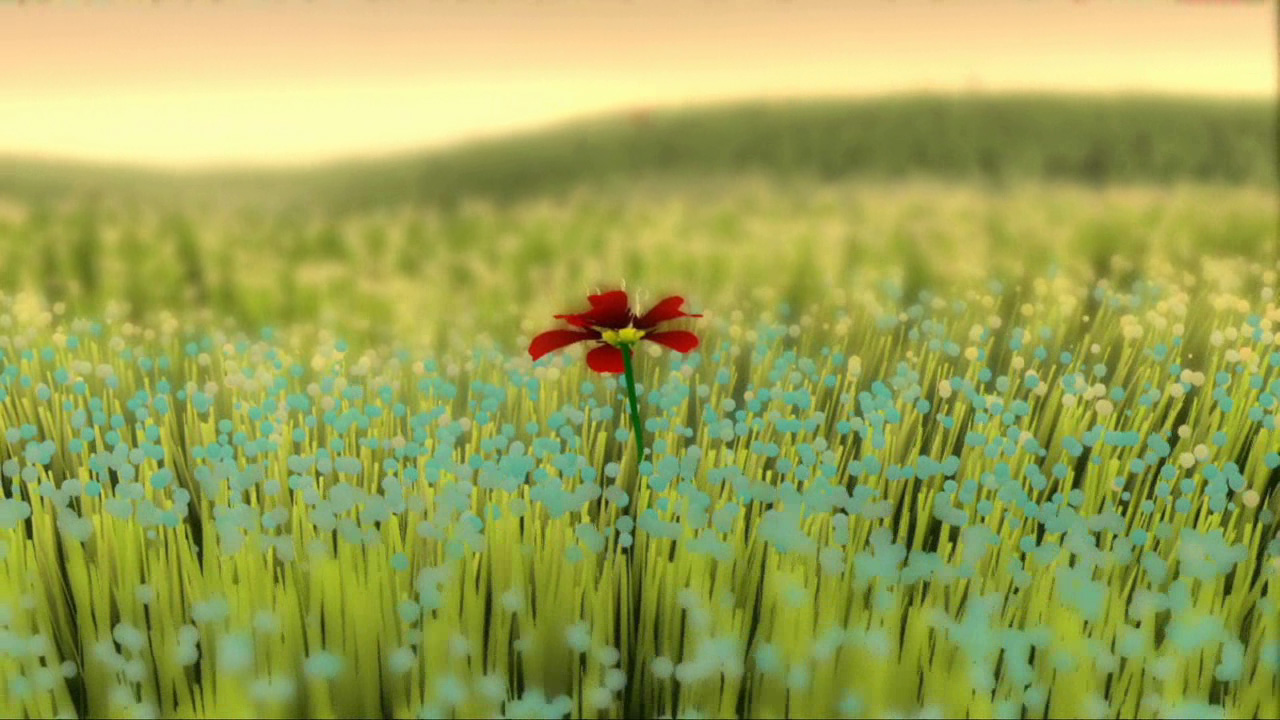
Friends from thatgamecompany have been busy working on a game called Flower. Derek Yu from TIGSource puts it best: "it looks quite evocative, although little is known about how it actually plays." I would like to add that the visuals look to be inspired by Boring 3D (a GOOD thing). That guy freaking rules, and I think he should at least get some props in the credits. The teaser tailer for Flower seems to suggest that the player will be some form of organic matter doing something related to pollinating flowers, though one can't be sure.


Ever since I watched the anime series Last Exile in May, I've wanted to make a game where the entire experience took place in a peaceful, endless field. Well, I also love walking through the grass with my bare feet on, so that could have something to do with it, too. :) Apparently TGC is one step ahead of me. If that's the case, I know exactly what their next game after Flower is going to be.

Thursday, September 13, 2007

Contract Work As A Means of Inspiration

A lot of people who try to start their own businesses, especially in game development, talk about the dangers of doing contract work. It can be dangerous because, as a wise man, Adrian Sannier, once told me, "Contract work can become an IV needle stuck in your arm pumping cash right into your veins. Once you get that needle in your arm, it's hard to take it out."

His point was that you can get into a lucrative cycle with contract work, where you try to use it to raise money for your business, but really just end up continuing to do it since it's more secure and cushy than starting your own game company.

However, as Mike and I have experienced in the last couple days, it has some great benefits that can be used for your game company. Besides the obvious extra money, the main one we noticed is inspiration for innovative game ideas.

Depending on the type of work involved, contract work can be a great means of inspiration. Mike and I have been taking a little time here and there to get going on a logo animation for Nate Beaird's company Tri-Factor. Nate is a friend I met at Immersion here in Des Moines. He wanted an animation that involved some pixie-like particles swirling around to form his logo, which is based on a triquetra, an ancient symbol commonly used in Christianity to represent the Trinity.

I don't really have access to After Effects or Motion, so I figured I could just use Flash to set things up. And of course Mike's programming prowess would ensure the animation behavior was appropriately awesome. So Mike and I teamed up to tackle the project.

We're very satisfied with the result so far (we're not finished), which I've uploaded to our website: Tri-Factor logo animation. Please note that performance is a bit slow at this point, so change the quality to Low if you're running into problems. Shown at left is some frames captured at full-screen.

Once things started to come together yesterday, Mike and I realized how great it would be to use this in a game somehow. I realized that doing small jobs like this could definitely help people come up with ideas that they wouldn't normally come up with.

With this in mind, I've established some guidelines for choosing contract work that can inspire your game ideas:

1. Have enough time to finish the job (and do it well). This is a service for other people, so you should take it very seriously. It can be easy to get wrapped up with lots of other things, so make sure you've set aside time to work on it.

2. Keep the projects small. Yes, you want to set aside time to work on it, but don't go too far. This is stuff you're doing on the side to get inspired. The main goal is to create your art/product, so make sure your time is divided to represent that.

3. Keep the work relevant. If the work is going to inspire you, it should be somewhat relevant to your field, i.e. game development. In our case, the work is an animation, and we made it interactive. The interactive part is what can be the most inspiring.

4. Keep the work creative. A Flash website for an accounting company might be interactive, which is relevant, but it's not the most creative work you can do. By choosing something creative, you are giving yourself the opportunity to solve problems in a more artistic way. This will exercise the right side of your brain, which you do when you're trying to think of unique game ideas. In my experience, creative projects tend to inspire the most.

5. Get paid reasonably. You're devoting time and hard work to this, so make it worth it. Besides, you're likely poor and you need the money anyway.